
Last updated November 21, 2026
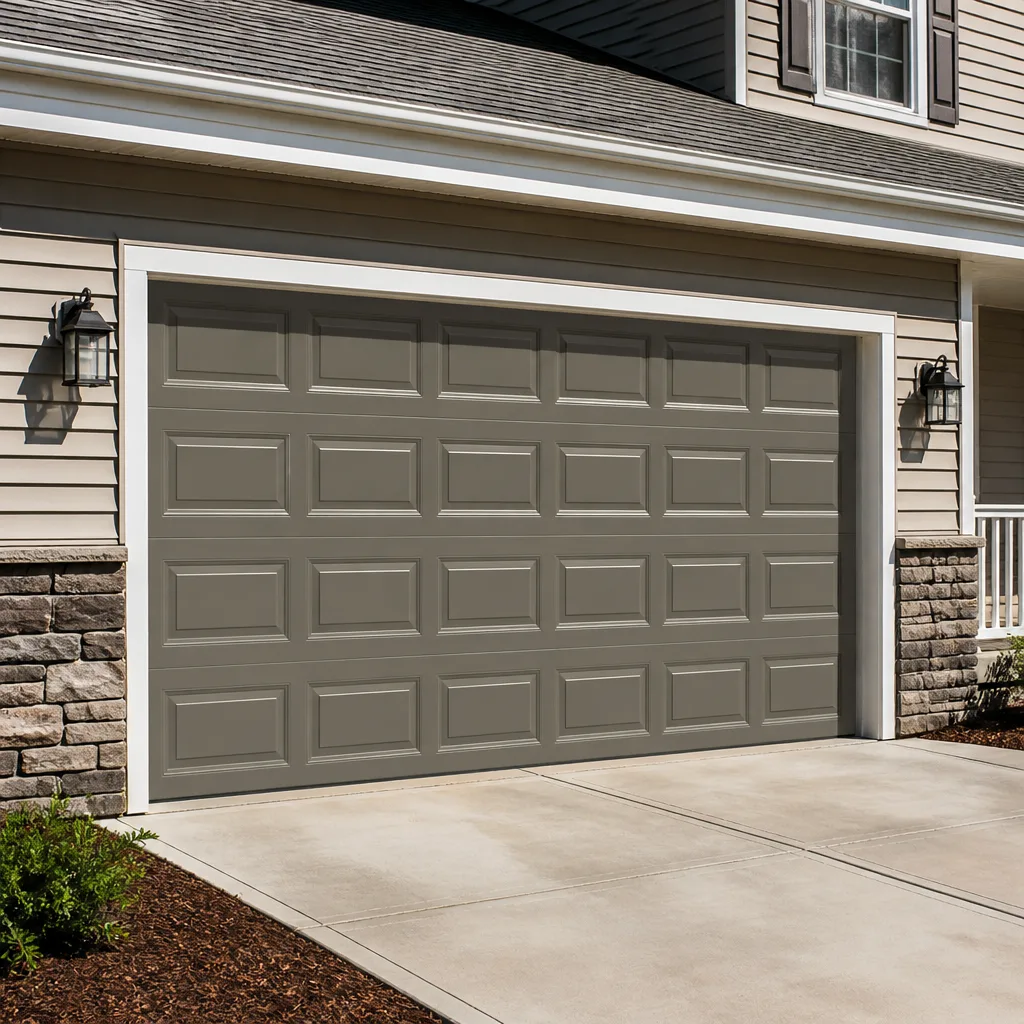 Raised-panel steel
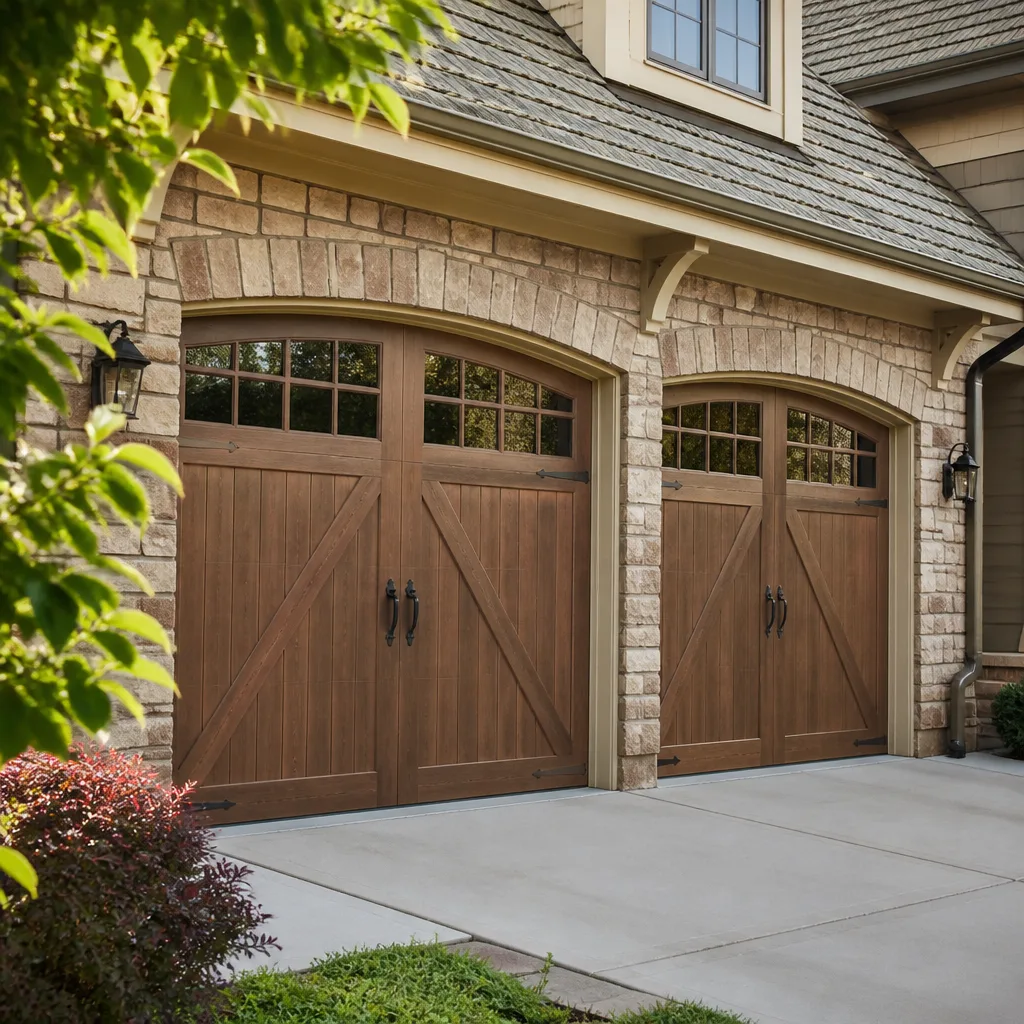 Carriage house
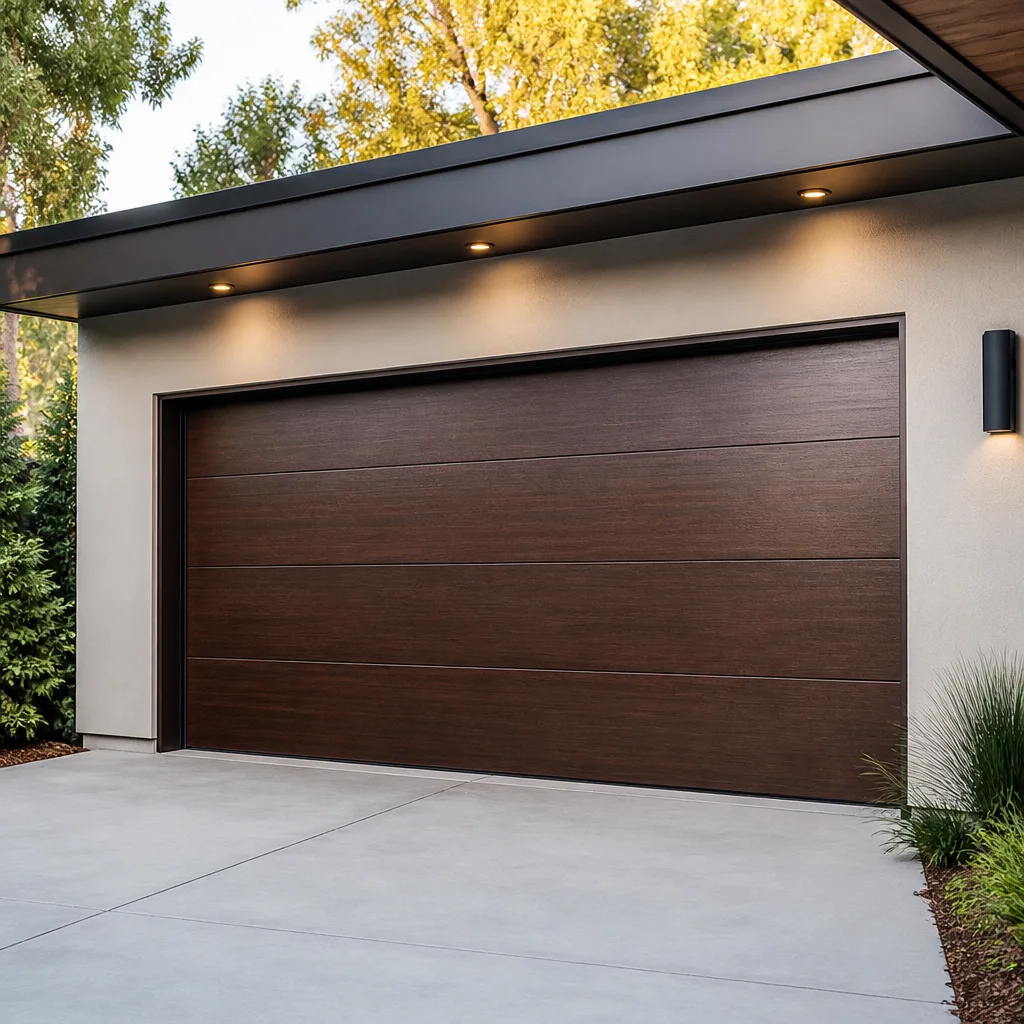 Modern flush
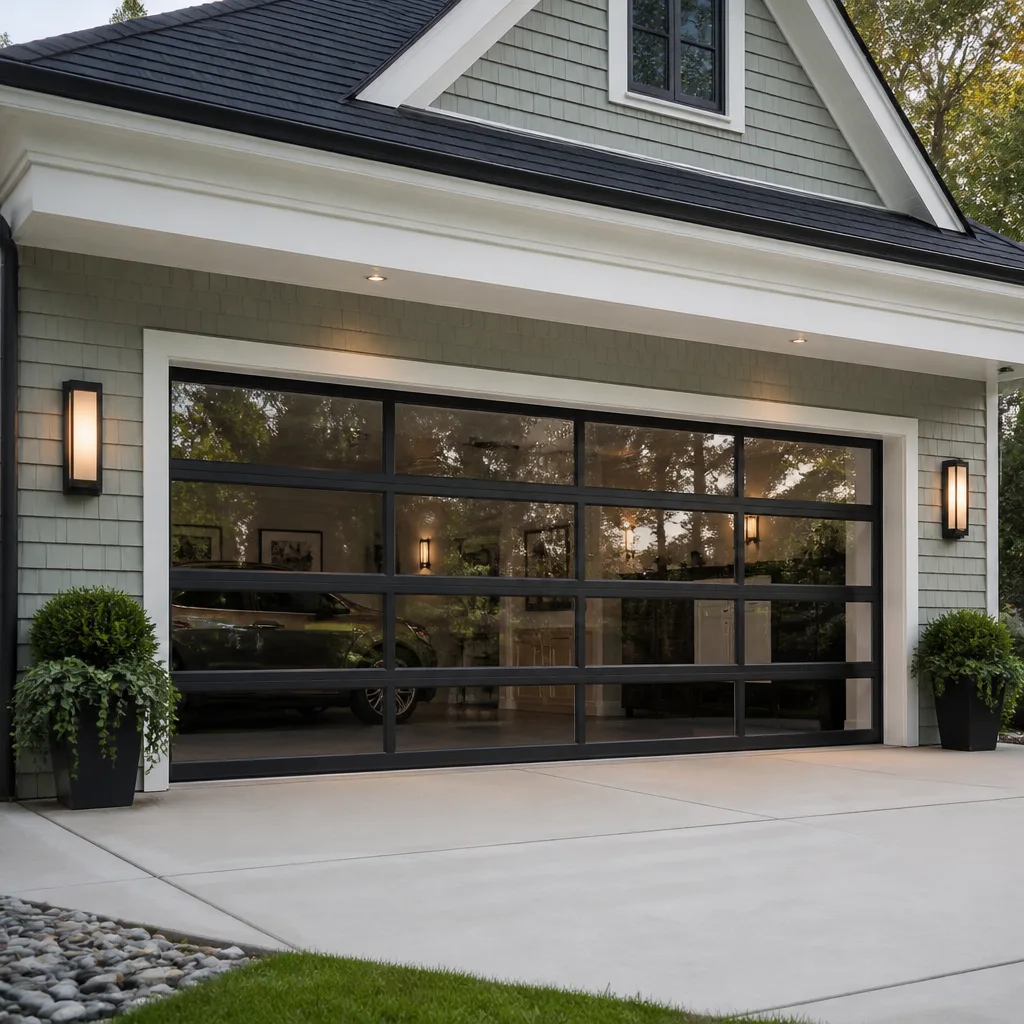 Full-view glass
 LiftMaster openers
 Chamberlain openers
Full 25-point door and opener safety check with every visit - springs, cables, rollers, tracks, and your LiftMaster or Chamberlain opener included
You get a price before we start. It does not change when the pro arrives.
Get your free estimateGarage Door Permits, Codes & Inspections in Torresdale, PA: What You Need to Know
Here’s the part most Torresdale homeowners get wrong: they assume a garage door swap is a ” cosmetic upgrade” that never touches the permit desk. In Philadelphia, a full replacement can fall under L&I’s building permit rules, and the paper trail (or the lack of one) follows the house, not the contractor who did the work. That means an unpermitted install from years ago can become your problem when you sell. This guide walks through when Philadelphia actually requires a garage door permit, how to check your existing door’s permit history on the city’s online portal, what an inspection looks like, the deed-restriction overlay some Torresdale subdivisions add on top of city code, and how to clean up an unpermitted job before a buyer’s inspector finds it.
Quick Answer
In Philadelphia, a full garage door replacement generally requires a building permit from the Department of Licenses and Inspections (L&I), while repair work like spring, cable, panel and opener swaps typically does not. If the door is being replaced, the opening is being enlarged or re-framed, or the header is being altered, expect a permit and an inspection. Always confirm the current rule with L&I or your local district before work starts, because the permit requirement lives with the scope of work, not with the price tag.
Styles & brands we work with
- Raised-panel steel
- Carriage house
- Modern flush
- Full-view glass
- LiftMaster openers
- Chamberlain openers
Table of Contents
- When Does Philadelphia Require a Permit for Garage Door Work?
- How to Check Whether Your Garage Door Was Ever Permitted
- What the Inspection Process Looks Like
- Which Code Sections Apply to Residential Garage Doors in PA
- HOA and Deed Restrictions in Torresdale Subdivisions
- Fixing an Unpermitted Prior Installation Before Resale
- How Torresdale’s Climate and Housing Stock Affect Door Specs
- Permits vs. Repair: What Actually Triggers a Paper Trail
When Does Philadelphia Require a Permit for Garage Door Work?
Philadelphia’s L&I requires a building permit for a full garage door replacement, but not for most repair work. The dividing line is whether you are swapping out the door itself (a new unit in the same opening) versus repairing the existing door (springs, cables, rollers, panels, tracks, opener). Repair jobs that leave the door in place generally don’t need a permit. Replacement, enlargement, or any change to the rough opening usually does. Because the specifics of the Philadelphia code are updated from time to time, call L&I or check its website before any job begins, and get the answer in writing.
Here’s how the permit question usually breaks down for Torresdale homeowners:
- Full door replacement (same opening, new door): Typically requires a building permit. This is the big one most people miss.
- New opening or enlarged opening: Requires a permit and a structural review of the header and framing.
- Panel replacement on an existing door: Usually no permit, since the door frame and opening are untouched.
- Spring, cable, roller or track repair: No permit. Safety-critical work, but not a permitting event.
- Opener swap or opener repair: No permit. Even a smart opener install is a low-voltage change at the outlet, not a structural one.
- Replacing the door with a different size or type: Permit required, plus an inspection once the door is hung.
We hear the same story from Torresdale homeowners again and again: “my contractor said we didn’t need one.” Sometimes that’s true, especially on a repair. On a replacement, it usually isn’t. Ask L&I directly and keep the answer with your home records. It costs nothing to ask and saves a lot of explaining later.
How to Check Whether Your Garage Door Was Ever Permitted
Philadelphia’s online permit portal (often called eCLIPSE) lets any property owner pull the permit history for an address, and that history is the first thing a buyer’s inspector will check. You can search by address and see whether permits were ever pulled, what type, and whether the job was ever closed out. If a garage door replacement was done without a permit, the portal is where the gap shows up. That’s the paper trail you want to resolve on your own terms rather than under contract pressure.
Here’s the step-by-step:
- Pull the property’s permit history from Philadelphia’s online permit portal using your full Torresdale street address.
- Look for any permit type that mentions garage, accessory structure, or alteration. A permit pulled for “replace garage door” is the one you want to find.
- Check the permit’s status. “Issued” or “closed” is fine. “Open,” “expired” or “no permit on record” for a known replacement is a flag.
- Cross-reference the date of the door replacement (ask the previous owner, check your inspection report, or read the door’s data plate) against the permit issue date.
- If you find nothing, pull the property’s deed and title history for any contractor warranty or invoice that would show when the door went in.
- Write down what you find. A written record with dates matters more than your memory when a buyer’s attorney starts asking questions.
Torresdale has a lot of older homes where the garage door has been replaced once or twice without any record kept. If the portal is empty and the door is newer than the house, that’s a signal to investigate before listing. Sorting it out early is far cheaper than sorting it out mid-closing.
What the Inspection Process Looks Like
An inspection for a garage door permit in Philadelphia is a visual verification that the door is installed per the permitted plans and that the safety features are present. The inspector isn’t going to run load calculations in your driveway. They want to see the door hung, the tracks secure, the header intact, and – critically – the safety features that the code and the door manufacturer require.
Here’s what an inspector typically looks at:
- Door in the opening as permitted: Correct size, correct type, correct installation method.
- Header and framing intact: No notching, cutting, or weakening of structural members beyond what the permit allowed.
- Attachment points: Tracks and spring anchor plate secured into solid framing, not drywall or blocking alone.
- Safety labels and warning tags: Manufacturer labels visible on the door and spring system.
- Opener safety reverse: The auto-reverse feature tested with a physical obstruction, plus the photo-eye safety beam if the opener was replaced.
- Headroom and clearances: Enough room above and behind the door for the track and spring travel.
- Permit posted and accessible: The permit card visible during the inspection.
If the inspector finds something, they’ll issue a correction notice with what needs to change. Most corrections are things a garage door pro can address quickly – re-anchoring a track, adjusting spring tension, or replacing a missing safety label. Getting a correction is not a crisis. Getting a correction after you’ve moved out and the new owner is trying to close is.
Which Code Sections Apply to Residential Garage Doors in PA
Residential garage doors in Pennsylvania fall under the state’s Uniform Construction Code (UCC), which adopts the International Residential Code (IRC) with Pennsylvania amendments. The specific sections that matter for a garage door installation cover structural attachment, automatic garage door opener safety, fire separation when the door is part of a garage wall, and the manufacturer’s installation instructions, which are treated as part of the approved design. Ask your L&I district inspector which section applies to your specific scope, and get it in writing on the permit application.
The big categories inspectors and code reviewers usually care about:
- Structural attachment: Tracks, brackets, and spring anchor plates must be fastened into structural framing, not just sheathing or drywall. This is the most common correction.
- Opener safety reverse: Automatic openers must reverse on contact with an obstruction. The photo-eye beam must be present and working if the opener has one.
- Fire separation: When a garage is attached to a home, the wall between them must maintain its fire rating, and a door installation can’t compromise it.
- Manufacturer’s instructions: The door must be installed per the manufacturer’s written instructions, which become the code’s default standard for the install.
- Egress: Where the garage door is the only exit from the garage, no change may block it.
- Header and framing requirements: Any enlargement of the opening has to be engineered, not just cut out and re-framed by eye.
We don’t write the code, and neither does any other garage door company. But our technicians work inside it on every Torresdale install we handle. Certified familiarity with brands like Clopay, Amarr, Chamberlain, and Genie helps because each has its own manufacturer instructions the code leans on, and we already know what each one requires before the door is ever hung.
HOA and Deed Restrictions in Torresdale Subdivisions
Some Torresdale subdivisions and planned communities have deed restrictions on garage door styles and colors, and those restrictions sit on top of city code. A door can pass L&I inspection and still violate a deed restriction, and that violation is enforced by the HOA or the neighbor with standing to complain, not by the city. If you’re replacing a door, read the deed restriction language before you order it, and get any necessary architectural review approval in writing. It’s a different process from the permit, but it runs in parallel and it can hold up a job.
What deed restrictions typically cover:
- Material and finish: Some communities restrict steel vs. wood-look doors, or the allowed finish.
- Color palette: A specific list of approved colors, sometimes tightly limited.
- Window patterns and panel styles: Carriage-house vs. raised-panel vs. modern flush.
- Signage and advertising: Limits on installer signage on the door or in the driveway during install.
- Setback and clearance: Rules about how the door presents to the street.
In our experience, the biggest headaches come when a homeowner orders the door first and reads the deed restriction second. If the door isn’t on the approved list, you’re either repainting it or replacing it, and neither is cheap. Read the restriction before you pick a model, and ask the HOA for written approval of the specific door you plan to install.
Fixing an Unpermitted Prior Installation Before Resale
An unpermitted garage door replacement can be resolved before you list, but the process needs to be started months in advance, not weeks. The basic approach is to apply for a permit after the fact, have the installation inspected as a “as-built” or “after-the-fact” permit, and address any corrections the inspector flags. Philadelphia’s L&I has a process for this; the sooner you start it, the more options you have. Waiting until a buyer’s inspector flags the door means you’re negotiating from the weakest possible position.
Here’s the sequence we recommend:
- Confirm the door was actually installed without a permit. Pull the online portal history and check the dates against the door’s install date.
- Get a professional inspection of the existing installation. A technician who works with Clopay, Amarr, and other major brands can tell you whether the install is structurally sound or whether it needs correction before you file.
- Apply to L&I for an after-the-fact permit. This is sometimes called a “permit to legalize” or similar in your district; the L&I permit desk can point you to the right application type.
- Complete any corrections the inspector requires. Re-anchor a track, replace a missing safety label, correct a wiring issue on the opener. Most corrections are small.
- Schedule and pass the inspection. Get the approval in writing and save it with your property records.
- Disclose the door’s history in the seller’s disclosure. A resolved permit is a non-issue at closing. An unresolved one becomes a negotiating chip.
Filing takes time in Philadelphia, and L&I review queues vary by district. Start the process well before you list. If you’ve just bought a Torresdale home and found an unpermitted install, you’re in the same boat – you can resolve it now, or you can inherit the problem at your own resale. Our team can come out, look at the door, tell you exactly what needs to happen, and give you a written estimate for any work involved. Call (855) 691-5232 for a free estimate.
How Torresdale’s Climate and Housing Stock Affect Door Specs
Torresdale sits in Northeast Philadelphia, close to the Delaware River and its tidal reach, with the neighborhood’s older rowhouses and single-family homes concentrated along Frankford Avenue and the surrounding blocks. That mix matters for garage doors in three ways: temperature swings, humidity, and the age of the wood framing the door has to anchor into. A door that’s spec’d for a dry climate is the wrong door for Torresdale, and an install that skips the framing check behind the old track is the wrong install for a house from the mid-20th century.
What that means for a Torresdale door:
- Freeze-thaw cycles: The door’s seals and weatherstripping need to be spec’d for temperature swings, not just the summer highs.
- River Valley humidity: Steel doors need a finish that handles regular humidity. Wood-look doors need the same on the substrate.
- Older rowhouse framing: Many Torresdale garages share a wall with the house. A door replacement has to preserve the fire separation, which means the install has to be planned around the existing framing rather than assuming new construction.
- Driveway and sightlines: The tighter lots in older Torresdale neighborhoods mean a door has to fit the opening it was originally built with, not an enlarged version that changes the look of the house.
- Salting and road treatment: Winter road salting along the driveways in the neighborhood accelerates corrosion at the bottom panel. That’s a maintenance point, not a permitting one.
The practical takeaway: Torresdale homes benefit from a door spec’d for a real four-season climate, and the install has to account for the age of the framing behind the door. This is where a pre-purchase conversation pays for itself. If you’re considering a replacement, we’ll walk the framing before we order anything.
Permits vs. Repair: What Actually Triggers a Paper Trail
Most of what we do on a Torresdale door – spring replacement, cable repair, opener swap, panel replacement, off-track correction – doesn’t need a permit. The jobs that do need a permit tend to be the ones that change the door itself or the opening it sits in. That distinction is worth holding onto because it tells you whether you’re facing a permit application and an inspection, or just a repair. The permit isn’t the point; the point is the door is safe, the install is solid, and the record follows the house cleanly.
Here’s the split we explain to homeowners who call us:
- Repair, no permit usually required: springs, cables, rollers, drums, tracks, hinges, panel swaps on the existing door, opener repair, opener replacement.
- Replacement, permit usually required: full door replacement, new opening, enlarged opening, header change, structural framing modifications.
- Emergency repair, no permit required: a snapped spring at 9pm is a repair, not a permitting event. We answer 24/7 for those calls. Fast dispatch from 7am to 7pm, Sunday through Friday.
Whatever the scope, our garage door repair team diagnoses the actual problem before recommending work, and we won’t push a replacement when a repair closes the issue. When a replacement is the right call, we’ll walk you through the permit question so nobody’s caught off guard at resale.
Common Mistakes to Avoid
- Assuming a “door swap” doesn’t need a permit. In Philadelphia, a full replacement usually does. Get the answer from L&I in writing before the door is ordered.
- Ordering the door before reading the deed restriction. A door that’s on the approved list at L&I may not be on the approved list for your Torresdale subdivision. Read the restriction first.
- Skipping the pre-install framing check on older rowhouses. Torresdale has a lot of mid-century construction where the wood behind the old track has been quietly rotting for years. Skip the check and the new door inherits the old problem.
- Not pulling the online permit history before listing. A buyer’s inspector will pull it. You should pull it first.
- Filing an after-the-fact permit a week before closing. L&I review takes time. Start the process months ahead, not days.
- Confusing “no permit on record” with “no permit required.” Those are different outcomes. The first one is a problem; the second one is fine.
- Letting an unpermitted install carry forward to the next owner. The problem doesn’t disappear when you sell. It just moves.
See the difference
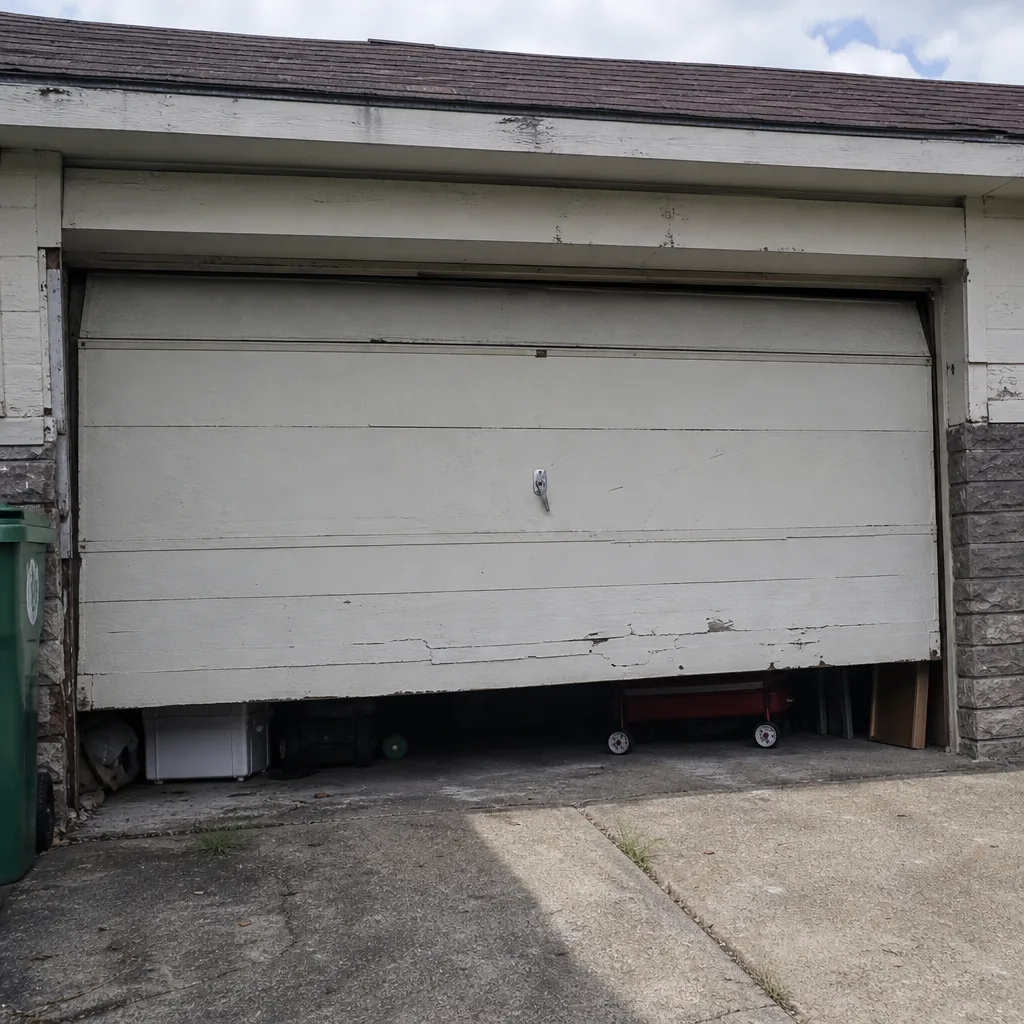 Before
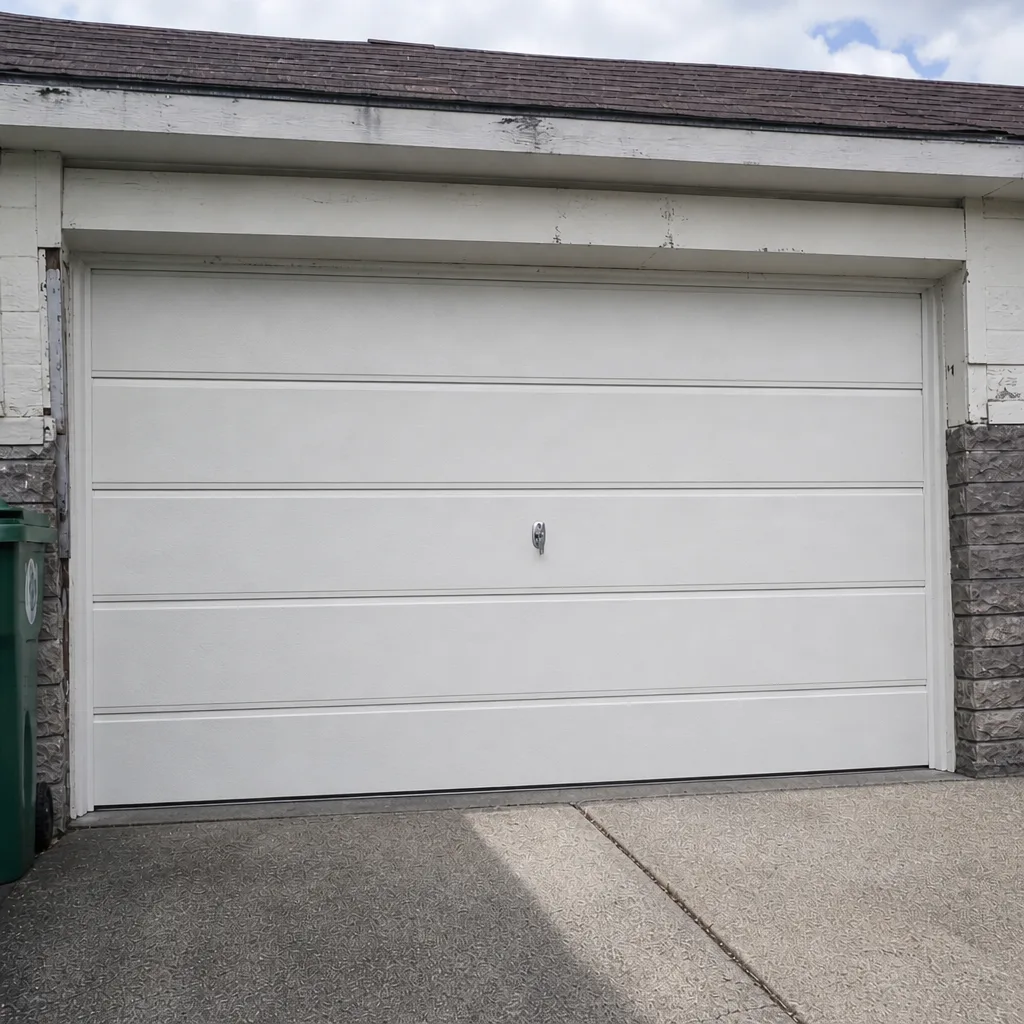 After
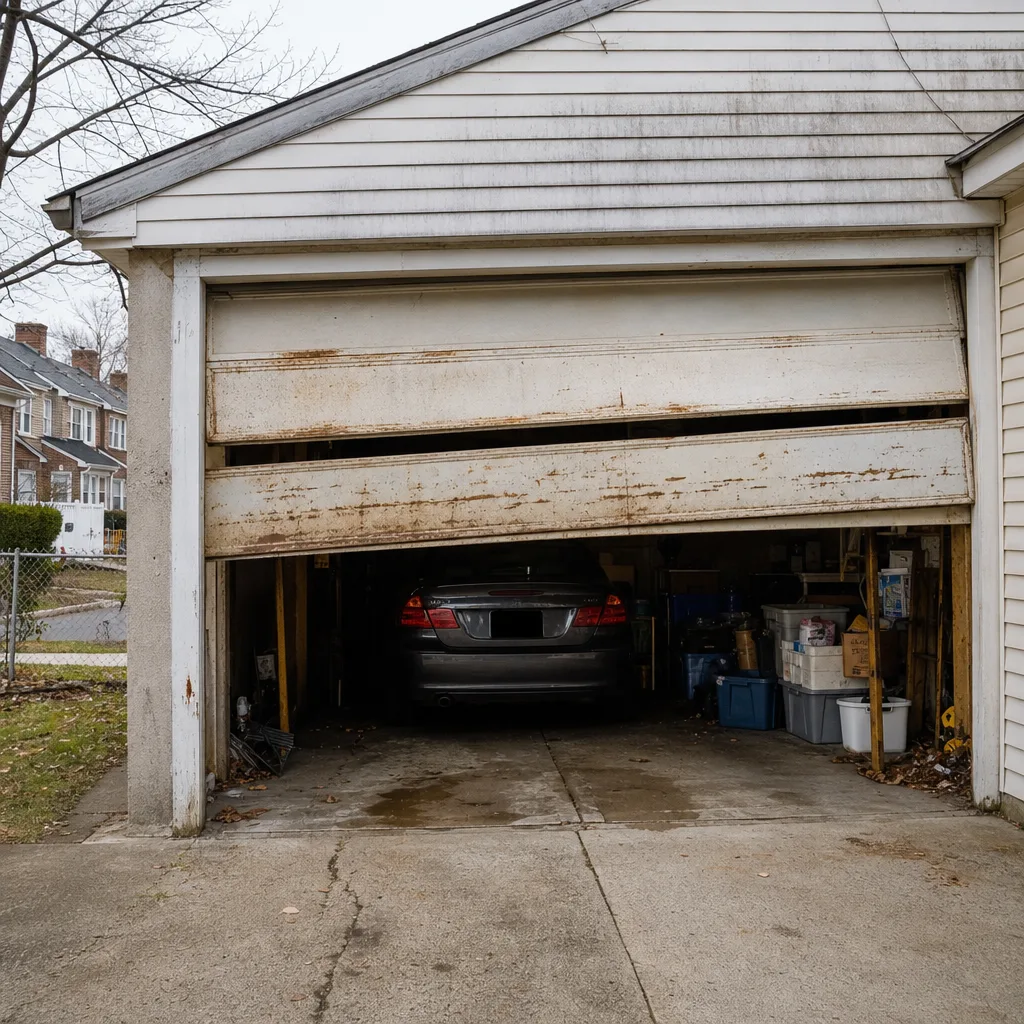 Before
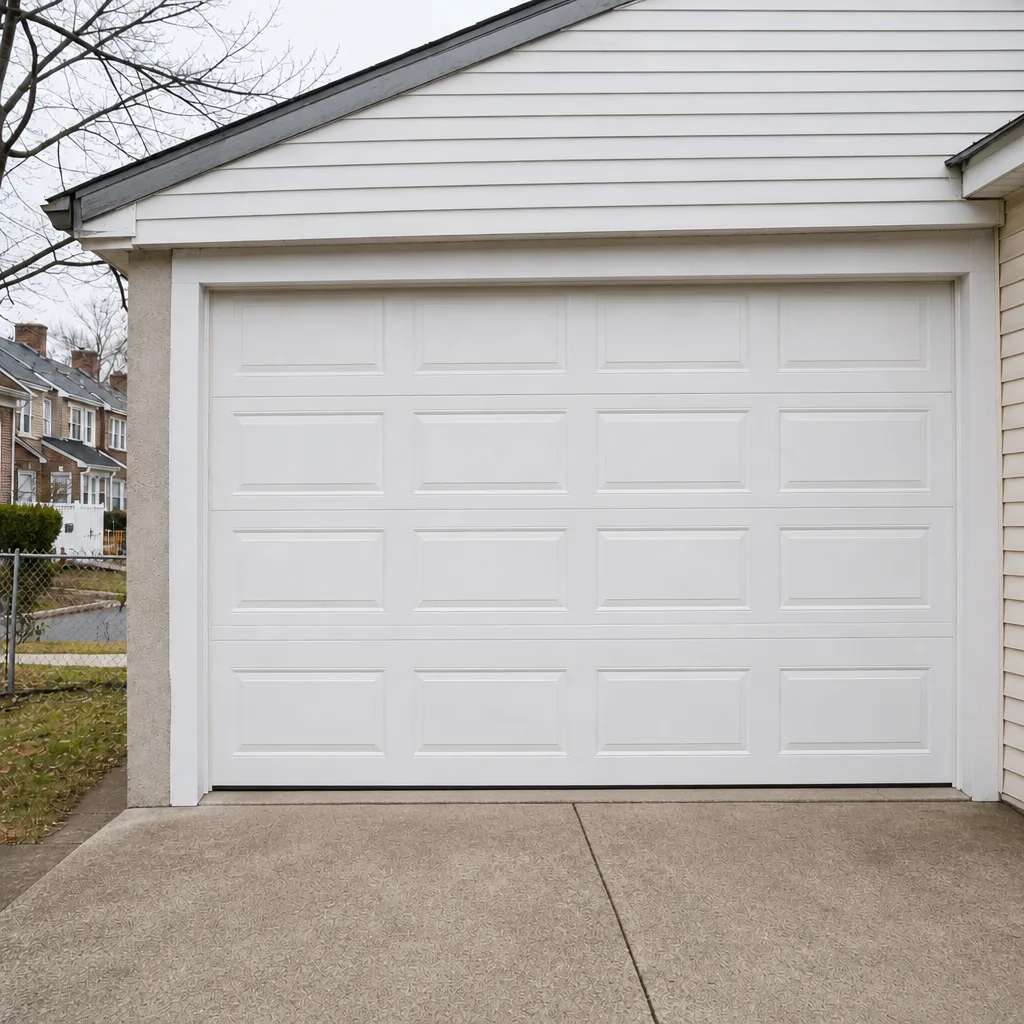 After
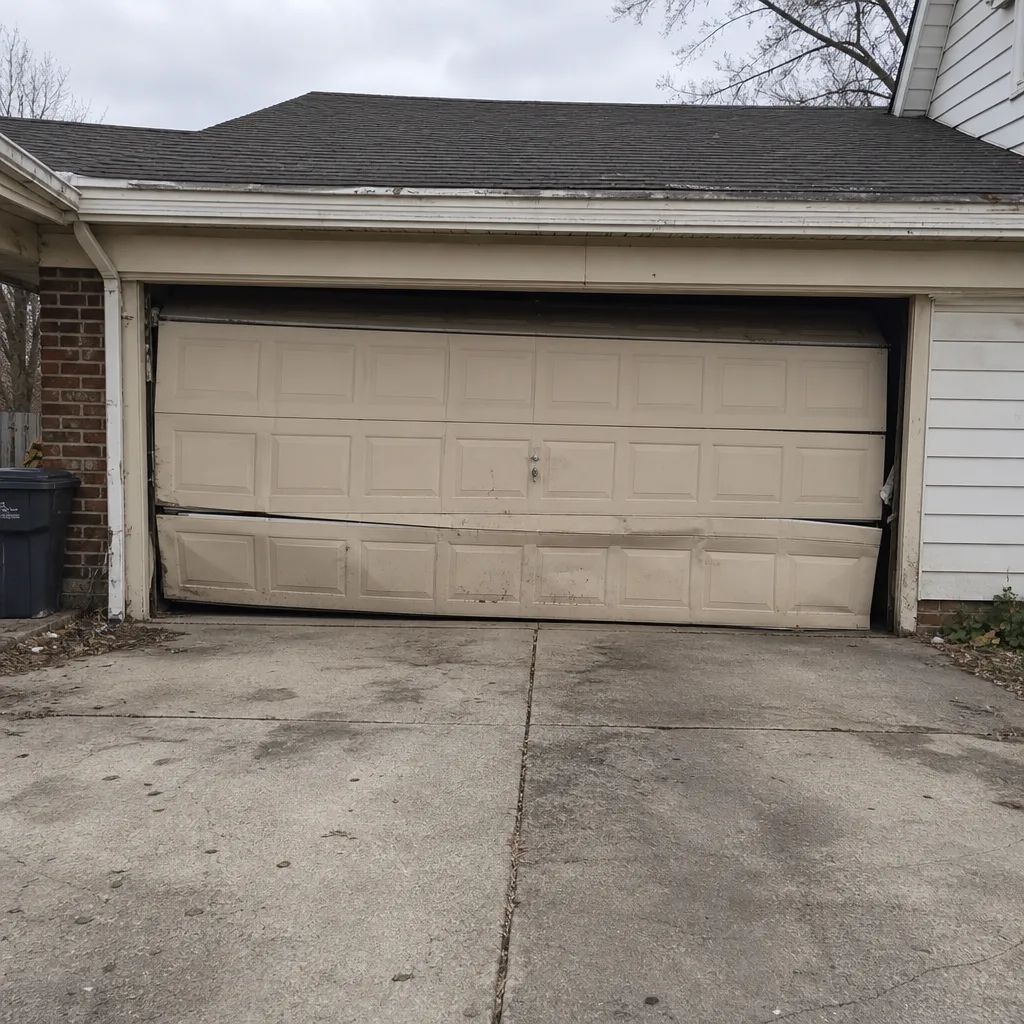 Before
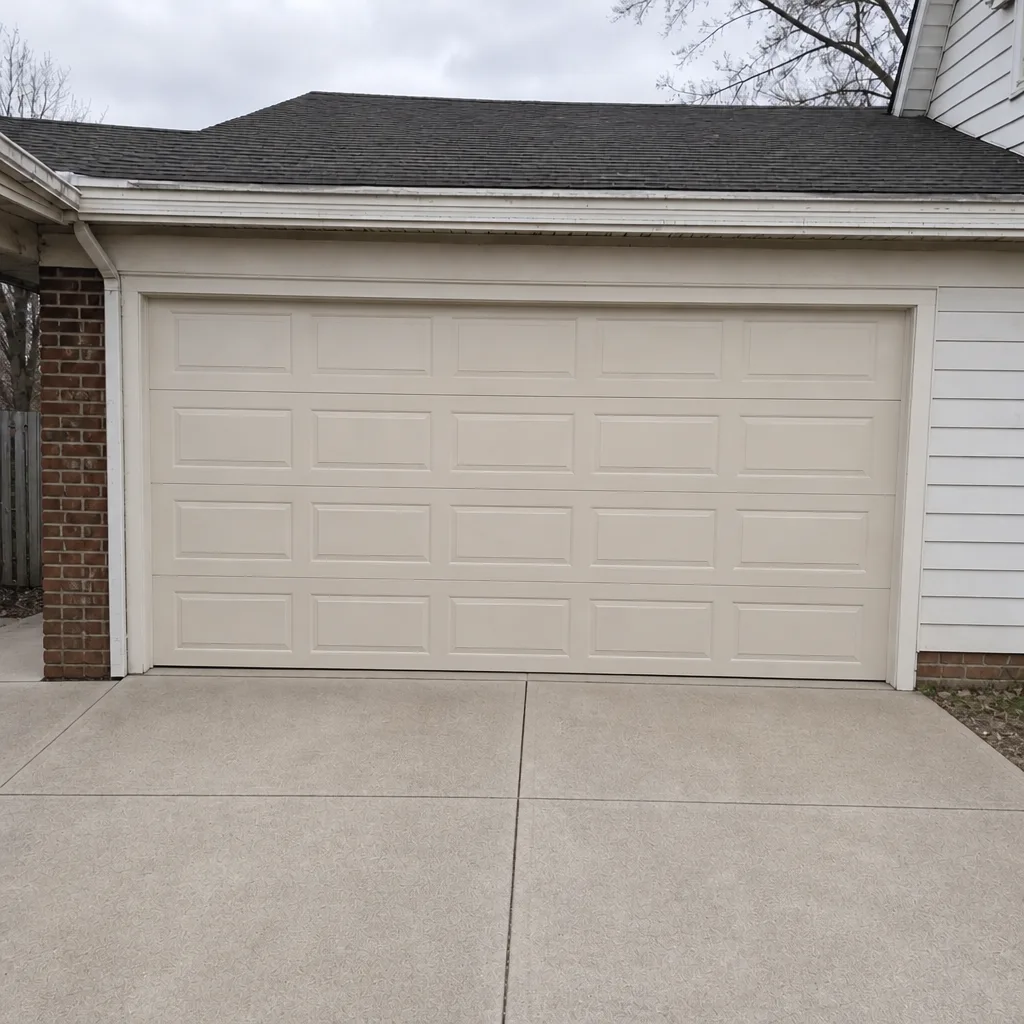 After
When to Call a Professional
Call a professional when a spring, cable or torsion system has failed – those are high-tension parts and a serious injury risk if handled without the right tools and training. Call when the door is off-track, when the opener reverses unexpectedly or won’t reverse at all, when the door is visibly sagging at the header, or when a panel is cracked enough that the door may not stay balanced. Call before a replacement so we can spec the door, order the right model, and walk the framing. And call before a listing if you’re not sure whether the existing door was ever permitted – our team can inspect it, tell you what L&I will want to see, and give you a written estimate for any work involved.
Garage Door Repair Torresdale offers free estimates in Torresdale – call (855) 691-5232. We answer 24/7. Fast dispatch from 7am to 7pm, Sunday through Friday. Every price is quoted and agreed in writing before any work starts, so you know what you’re paying before a tool is picked up.
Frequently Asked Questions
In Philadelphia, a full garage door replacement usually requires a building permit from the Department of Licenses and Inspections, while spring, cable, panel and opener repairs generally do not. The dividing line is whether the door itself is being swapped out or the opening is being altered. Confirm the current rule with L&I before work begins, and have the answer in writing. Call (855) 691-5232 for a free estimate on any replacement or repair.
Pull your property’s permit history from Philadelphia’s online permit portal using your full street address. Look for any garage or alteration permit and check its status. If a newer door is on the house and no permit was ever pulled, that’s a flag worth resolving before you sell. Call (855) 691-5232 if you want a professional to inspect the door and tell you what L&I will look for.
An inspector verifies the door is installed as permitted, that the tracks and spring anchor are fastened into structural framing, that the header is intact, that safety labels are present, and that the opener’s auto-reverse function and photo-eye beam work. Most corrections are small. Call (855) 691-5232 for a free estimate on any corrections.
Sometimes, yes. Some Torresdale subdivisions and planned communities have deed restrictions on door materials, colors, window patterns and panel styles that sit on top of city code. Read the restriction before you order the door, and get written HOA approval for the specific model you plan to install. Call (855) 691-5232 to talk through what will and won’t pass the deed restriction before you commit.
Yes, usually. Philadelphia’s L&I has an after-the-fact permit process for installations that were done without a permit, and in most cases the existing door can be inspected, corrected, and passed. The door itself stays in place. The key is starting the process early, not the week before closing. Call (855) 691-5232 for a free estimate on any installation corrections.
The local professional we connect you with is licensed and insured as the state requires, and our technicians have up to 9 years of experience working across brands including Clopay, Amarr, Chamberlain and Genie. We work on the eight major garage door brands so we already know what to look for before we ever touch the door. Call (855) 691-5232. We answer 24/7. Fast dispatch from 7am to 7pm, Sunday through Friday.
The Bottom Line
Garage door permitting in Torresdale is simpler than it sounds once you separate repair from replacement. Springs, cables, openers and panels are repairs – no permit. A full door replacement is a permitting event that needs a plan, an inspection, and an eye on your deed restrictions. Pull your property’s permit history before you list or buy. Read the deed restriction before you order a door. And when something high-tension fails at the wrong moment, call a pro instead of a neighbor with a ladder.
If you want a straight answer on where your door stands, our team can inspect it and tell you what L&I will want to see. We’ll give you a free estimate, we’ll quote and agree on the price before any work starts, and we’ll tell you honestly if a repair holds up better than a replacement. That’s the whole test for whether a garage door decision is worth making.
For the full range of what we do in Torresdale – from a snapped spring to a new door – start with our Garage Door Repair Torresdale page, or jump straight to garage door installation if you’re ready to plan a replacement, or garage door opener repair if the opener is the problem. Call (855) 691-5232 for a free estimate. We answer 24/7. Fast dispatch from 7am to 7pm, Sunday through Friday. Closed Saturday.
Written by the team at Garage Door Repair Torresdale.