
Top Signs You Need Garage Door Service – Don’t Ignore These
The clearest signs you need garage door service are a door that moves slower or louder than it used to, one that reverses before it touches the floor, a visible sag across the top panel, or fraying cables and worn rollers you can spot in under two minutes. None of these are “just what old doors do.” Each points to a specific component under load, and most are cheap to fix now and expensive to fix after the damage spreads. Read on, and if you’d rather skip the detective work, call (855) 691-5232 and we’ll take a look.
A garage door that takes three seconds longer to open than it did six months ago isn’t getting old. It’s a motor working against increasing resistance, and that resistance has a cause. Left alone, the motor keeps straining until something gives, and the repair bill grows with it. The trick to catching trouble early is learning to read each symptom as a mechanical story about which part is telling you something.
What Does Slow or Uneven Operation Actually Mean?
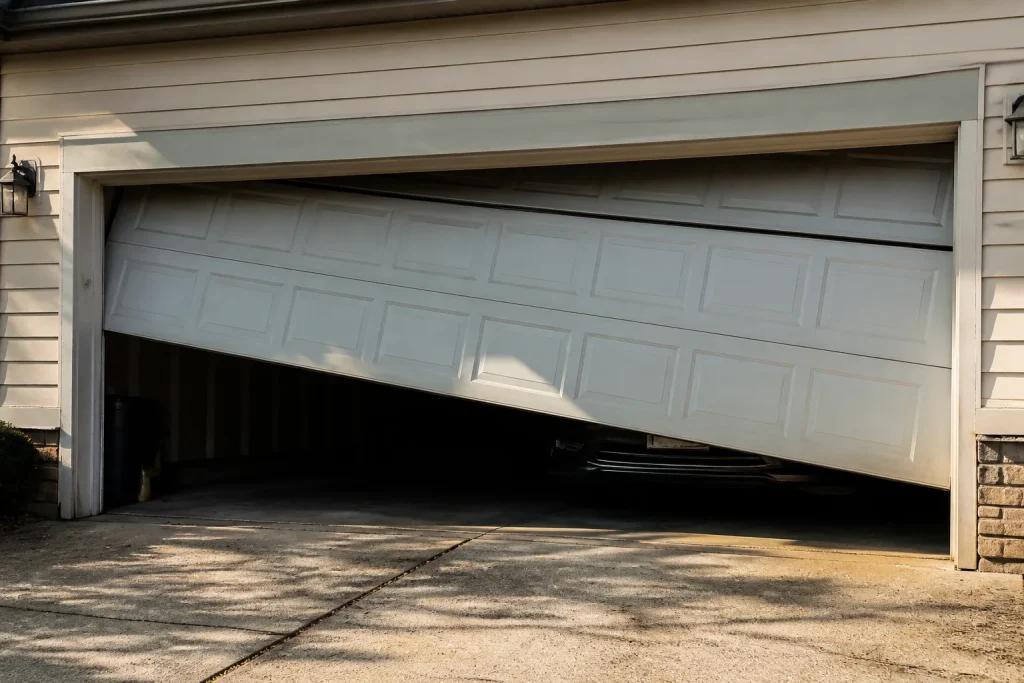
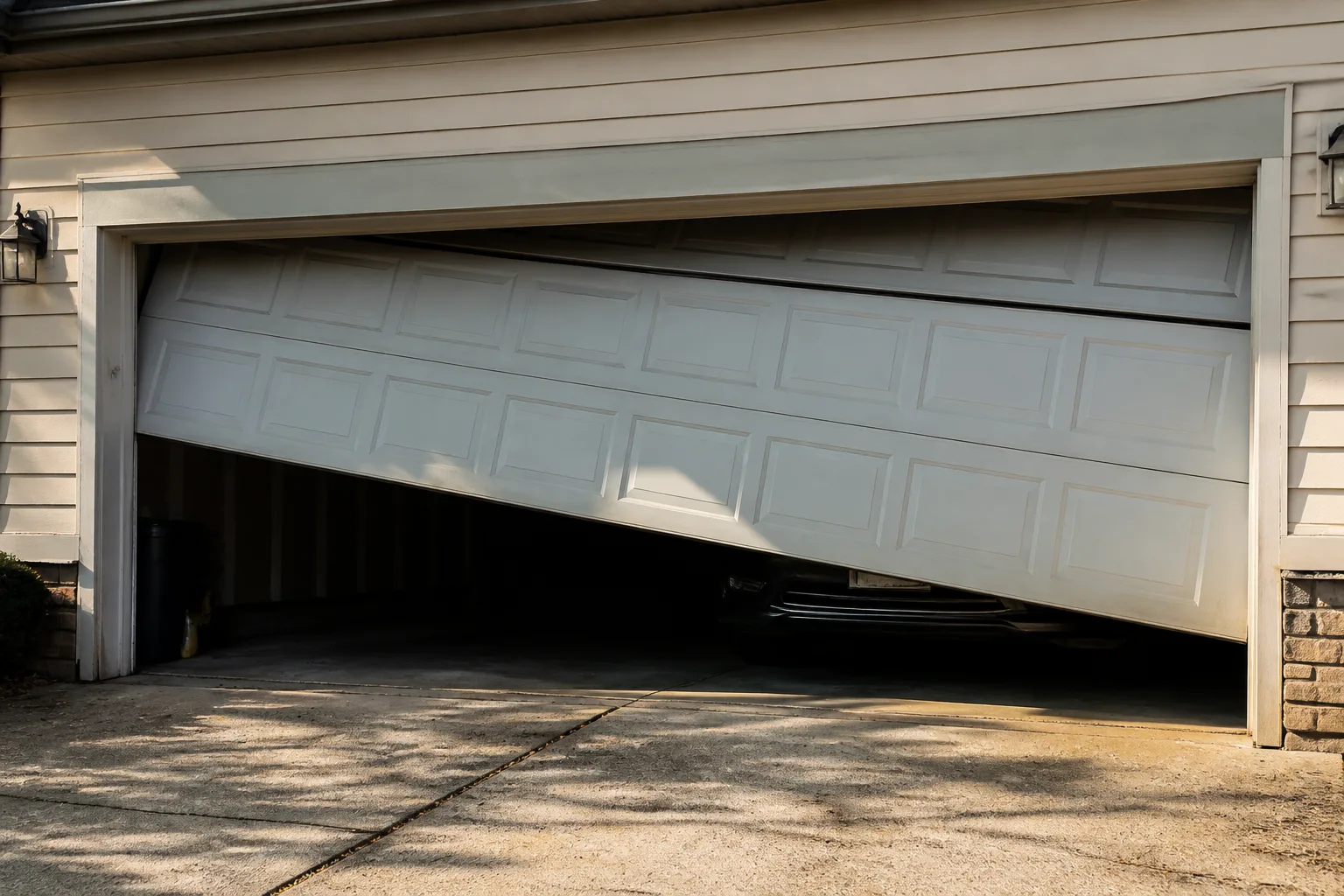
Slow or lopsided movement almost always means a spring has lost tension or a track has shifted out of alignment. The opener isn’t failing first; it’s compensating for a door that’s gotten heavier or a rail that’s dragging. When a torsion or extension spring weakens, the motor has to lift more of the door’s weight on its own. That’s labor it was never designed to do, and it wears the gear and motor prematurely. Uneven movement, where one side rises before the other, points to a snapped or stretched spring on one side, or a roller that has jumped its track.
In our experience around Torresdale, homeowners often describe the door as “a little sluggish” for weeks before anything breaks. That sluggishness is the resistance building. Two things worth knowing:
- Both springs usually age together. If one is weak, the other is close behind, which is why matched pairs are typically replaced as a set.
- A slow door is a warning, not a style. The motor is doing work a spring should be doing, and it fails faster for it.
If the door has gone from slow to stuck, that’s a repair worth prioritizing. We handle garage door repair across the neighborhood and can usually tell you what’s failing the same day you call.
The Balance Test: Find Spring Wear Before It Snaps
A spring that’s about to fail often announces itself through an imbalance you can feel by hand. This is a test you can safely do yourself, because it doesn’t involve touching the springs, the cables, or any of the high-tension parts. It only asks the door to do a small, controlled lift.
- Close the door and pull the manual release cord so the opener is disconnected and the door is hand-operable.
- Lift the door about halfway up by hand, then let go gently.
- A healthy door stays roughly where you leave it. A door that drops or feels heavy to lift has spring tension that’s fading.
Ten seconds is all it takes. If the door sinks or feels like dead weight, the springs are losing their ability to hold the door’s weight, and that’s the stage before a snap. A snapped spring is loud and dramatic, and it also leaves the door too heavy to lift safely. Catching the wear early means fixing it on your schedule instead of the door’s.
Here’s the part we’d underline: spring replacement is high-tension work. Torsion and extension springs store enormous force, and the tools and training to release that force safely are not things you improvise. We don’t hand out step-by-step spring instructions because people get hurt following them. Our technicians are trained specifically for spring work, and that’s the right way to handle it.
Why Does the Door Reverse Before It Hits the Floor?
A door that goes down and then immediately reverses has one of four causes, and they need completely different fixes: a blocked safety sensor, a misaligned sensor lens, a limit setting that’s off, or a logic board or wiring fault. Narrowing it down is a process of elimination, and the order matters.
A slow or uneven door that also grinds has two problems feeding each other. Fix the resistance first, or the motor problem comes back. Here’s the order we work through:
- Check the safety sensors first. A leaf, a cobweb, or a bumped sensor near the floor can trip the reversing behavior. Clean the lenses and confirm both sensor lights are solid.
- Confirm the lenses point at each other. A small bump can knock them out of alignment, and the door reads that as an obstruction.
- Test the limit setting. If the door reverses right before the floor without an obstruction, the travel limit may need adjusting.
- Suspect the board or wiring last. If sensors and limits check out, the opener’s logic or a damaged wire is the likely culprit.
This is one of those symptoms where the fix ranges from a two-minute cleanup to a board replacement, and guessing wrong wastes time. Our garage door opener repair covers LiftMaster, Chamberlain, Genie, Craftsman and the older systems still running in plenty of Torresdale garages, so we know the reversing quirks on each. We repair your opener before recommending a replacement, because a reversing door is often a sensor problem, not a dead motor.
The Two-Minute Visual Checklist for Cables and Rollers
Cables and rollers fail quietly, so a quick look every month or two catches them before they strand a car. Cables are under tension and can snap with force, so don’t touch, tug, or adjust them. Inspect with your eyes only. With the door closed, look for:
- Fraying or kinked cables. A cable that looks frayed, has broken strands, or has jumped its drum is a call-a-pro situation.
- Worn rollers. Flat spots, cracks, or wobble in the rollers mean they’re dragging and adding strain.
- Loose or bent hinges and brackets. A hinge that’s pulled away or a bent bracket signals the door is fighting the track.
- Debris on the track. Grit, hardened grease, or a small obstruction on the track rail causes grinding and uneven travel.
A grinding noise usually traces back to the rollers, the track, or the opener’s gear, and a quick visual pass tells you which. If you see a frayed cable, stop using the door and call it in. Cables carry the door’s weight and a failure under load can drop the door. That’s not a fix to attempt from a video.
How Torresdale Weather Makes an Intermittent Problem Worse
Seasonal temperature swings are a big reason a door problem that “went away” comes back. Metal contracts in cold and expands in heat, so tracks, springs, and hinges shift with the seasons. A door that stuck one cold morning and seemed fine a week later didn’t heal. The cold load simply eased, and the underlying wear is still there, waiting for the next cold snap.
Torresdale garages see this in two ways. In colder months, stiff grease on the rollers and slightly contracted tracks add friction, so a marginal spring gets exposed. In warmer months, the metal relaxes and the problem hides. That disappearing act is the trap: the failing part is still failing, and the next cold stretch brings it back worse. If you’ve noticed a seasonal pattern, note which door components act up and when, and mention it when you call. It helps us know what to look at. If you’re weighing a bigger fix versus a repair, garage door installation options and what triggers them are worth understanding before the motor gives out entirely.
Sagging sections tell their own story too. A door that sags across the top panel points to a bent strut, a broken hinge, or long-term strain from a door that’s been running heavy for a while. Panels and hinges take that load, and it shows up as a visible dip. On a wood or insulated steel door from Clopay, Amarr, or Wayne Dalton, the fix depends on the cause, which is why an inspection matters more than a guess.
When to Call a Pro Instead of Living With It
Call a pro the moment you see a frayed cable, a snapped spring, a door sagging on one side, a motor that strains or smells hot, or a door that won’t stay on track. Those are safety-critical failures where the wrong move can hurt someone or cause the door to drop. Sluggish operation, minor grinding, and a door that reverses can often wait a day or two, but not longer than that. Left alone, each one adds strain that turns a small repair into a full replacement.
Here’s where we can help. We work on Genie, Clopay, Amarr, Wayne Dalton and four other major brands, so we already know what to look for before we arrive. That covers repairs, openers, springs, and new doors under one call, no referrals to chase. If a spring snaps or the door won’t move, we offer emergency service because a broken garage door doesn’t wait for business hours. A stuck car in the morning is exactly the kind of call we handle.
When to call a pro, in one line: any time you see or hear something that involves the springs, cables, or the door coming off its track. Those aren’t DIY. A slow or noisy door you can watch for a week; a snap or a frayed cable you call in the same day.
Related services in Torresdale: if you’re not sure whether you need repair, a tune-up, or a replacement, our main Garage Door Repair Torresdale page spells out where each one fits. Estimates are free, and the written estimate sets the final price before any work starts.
Key Takeaways
- Slow or uneven movement means a spring losing tension or a track out of line, and the motor pays for it.
- The 10-second balance test finds spring wear before it snaps, without touching high-tension parts.
- A reversing door has four possible causes; check sensors, then limits, then the board.
- A 2-minute visual pass for frayed cables and worn rollers catches failures early.
- A “seasonal” problem doesn’t heal with warmer weather; the failing part is still failing.
The Bottom Line
Every warning sign is a message from a specific part under stress: the spring that’s lost tension, the roller that’s dragging, the track that’s shifted, the cable that’s frayed. Learn to read the message and you fix a small problem on your terms. Ignore it and the same part takes the motor or the panel down with it. If you’re in Torresdale and need help, Garage Door Repair Torresdale offers free estimates. Our technicians have up to 9 years of experience, and we quote and agree the price before any work starts. Call (855) 691-5232. We answer 24/7. Fast dispatch from 7am to 7pm, Sunday through Friday.
Frequently Asked Questions
Repair is usually the answer when the door structure and panels are sound and the problem is one component: a spring, a roller, a cable, an opener. Replacement makes more sense when panels are warped or rusted through, or when several major parts are failing at once. We repair your opener and worn parts before recommending a replacement, and a free estimate tells you which side of that line your door is on. Call (855) 691-5232 for an exact quote.
A slow door usually means a spring has weakened or a track is dragging, so the motor is lifting weight the springs should carry. That added resistance wears the motor and gear faster the longer it goes on. It’s typically a smaller fix now and a bigger one later. Call (855) 691-5232 for a free estimate.
No. Torsion and extension springs store high tension, and releasing or replacing one without the right tools and training can cause serious injury. Spring replacement is a job for trained technicians. We do spring work as a dedicated service, so it’s handled safely. Call (855) 691-5232 to schedule a look.
The most common cause is a blocked or misaligned safety sensor near the floor, followed by a travel limit setting that’s off, then a logic board or wiring fault. Cleaning and realigning the sensors is the first thing to check. If the door still reverses with clean sensors, it’s worth a professional diagnosis. Call (855) 691-5232 for an exact quote.
Written by the team at Garage Door Repair Torresdale.
Need Garage Door Help?
Call Garage Door Repair Torresdale - the local pro we connect you with is licensed and insured, here with fast help in Torresdale.
(855) 691-5232